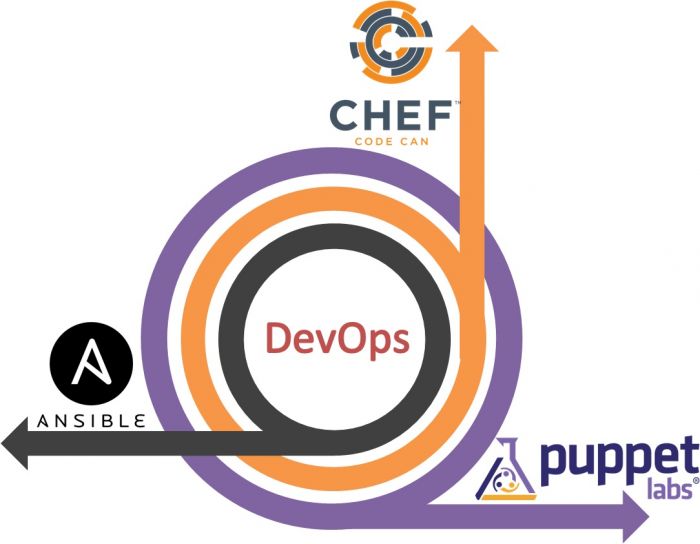
Top Questions on Server Configuration Management Tools Chef, Puppet and Ansible


As a quick recap, configuration management tools enable companies to standardize and automate their infrastructure. Through standardization, you can build systems that are platform independent (i.e. instead of relying on AMIs or provider specific tool-sets). These tools also make it easy reproduce servers for scaling or testing, and recover from disaster quickly by defining a proper application state. For example, if servers are not in that defined state when each server is checked, they are restored to their proper state. In addition, this standardization makes it easy to on-board new developers.

While the language across configuration management tools is different Read more click here

Reference:- This article was originally posted on scmGalaxy.com

Comments

  1. This article offers a helpful list of common questions on server configuration that many beginners and even experienced learners might face. I like how the questions are clearly written and cover important topics about setting up and managing servers. For someone new to DevOps or IT, this post makes it easier to think about what areas to study and what interviewers might ask. The explanations encourage deeper understanding and give useful direction for learning more about server setup and best practices. Thank you for sharing this practical resource — it will definitely help many people build confidence in server configuration skills .

    ReplyDelete

Post a Comment

Popular posts from this blog

Top 10 Vulnerability Assessment Tools in 2025 — Features, Pros & Cons & How to Choose

Top 10 Vulnerability Assessment Tools in 2025 — Features, Pros & Cons & How to Choose In a world where cyber threats evolve at lightning speed, organizations can't afford blind spots. Vulnerability assessment tools are no longer optional — they are critical for proactively discovering weaknesses, prioritizing risk, and enabling remediation. In this comprehensive 2025 guide, we analyze the Top 10 Vulnerability Assessment Tools , comparing features, pros & cons, and ideal fit scenarios. Use this to help you choose a tool that aligns with your risk posture and architecture. Also check our full comparison article: Top 10 Vulnerability Assessment Tools in 2025: Features, Pros & Cons, Comparison Why Vulnerability Assessment Matters Today Vulnerability assessment is the process of discovering, evaluating, and prioritizing security flaws in systems and networks. Unlike a penetration test, which attempts exploitation, vulnerability assessment focuses ...

SecDevOps: Putting Security at the Heart of DevOps

​ SecDevOps: Putting Security at the Heart of DevOps Agility has become an unavoidable necessity in a fast-moving technology environment, but achieving it can be a challenge for organizations and their development teams. The DevOps philosophy provides a road map; following it is not always as easy. Even more crucial than the need to transform the development process is the need to protect against ever more sophisticated threats and attacks. But some organizations are finding that agility and security can go hand in hand. SecDevOps is an approach to development that puts security right at the heart of DevOps by making it integral to the development cycle. Read more click here Reference:- This article was first published on BestDevOps.com

Container Security (Done Right): Image Scanning, Runtime Policies, and Least Privilege

 If you’re running containers in production (Kubernetes or not) and want security that actually works in real life—not just compliance checklists—this guide breaks container security into a practical, engineer-friendly system: image scanning , runtime policies , and least privilege , with clear steps you can apply immediately. Container security isn’t one tool. It’s a workflow you run continuously: ✅ Image Scanning → catch vulnerable packages, secrets, and risky configs before deploy ✅ Runtime Policies → prevent suspicious behavior in production (unexpected processes, file access, network calls) ✅ Least Privilege → minimize blast radius (non-root, minimal capabilities, tight RBAC, restricted egress) Read here: https://www.cloudopsnow.in/container-security-done-right-image-scanning-runtime-policies-and-least-privilege/ #ContainerSecurity #Kubernetes #DevSecOps #CloudSecurity #AppSec #SupplyChainSecurity #SRE #DevOps #Docker #SecurityEngineering